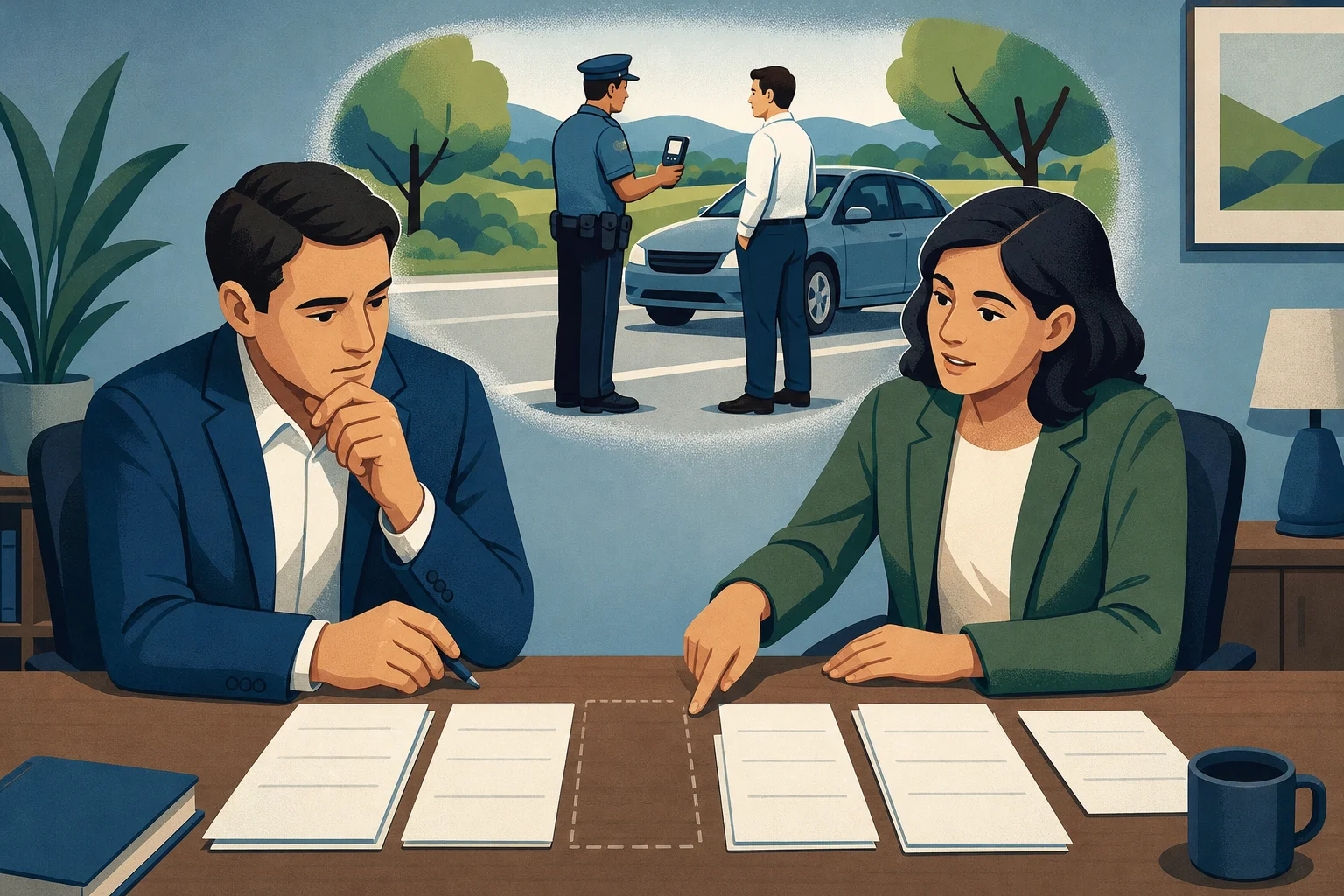
You took prescribed medication and did not drink alcohol, yet you are facing a DUI charge. That can be confusing. Virginia’s DUI law can apply to prescription-drug impairment even without alcohol, whether your case is in Prince William County or elsewhere in the state.
Yes, prescribed medication can be involved in a DUI charge without alcohol. But under Virginia Code § 18.2-266(iii), taking medication alone is not enough: the drug must impair your ability to drive or operate a motor vehicle safely.
Why alcohol is not required
Virginia’s DUI law does not stop at alcohol. Clause (iii) covers narcotic drugs, other self-administered intoxicants or drugs, and combinations of drugs. That can include prescribed medication, but the law requires impairment of your ability to drive or operate safely.
Here is how the statute describes that requirement: “to a degree which impairs his ability to drive or operate any motor vehicle, engine or train safely.” This part of the law does not require alcohol; combined alcohol-and-drug impairment is addressed separately in clause (iv).
Be sure to tell your lawyer you did not drink. That matters, but it does not by itself answer whether medication impaired your ability to drive safely.
What if you took the medication as prescribed?
Your prescription label and dosing instructions are worth gathering. Still, clause (iii) uses the broad phrase “drug of whatsoever nature.” The wording does not make an exception just because medication was prescribed or taken as directed. It also requires impairment of safe driving or operation—not simply medication use.
Try separating two questions: What did you take, and what evidence supports or challenges the claim that it impaired your ability to drive safely? Your prescription record helps explain the first question. Ask your attorney how it fits into the second rather than assuming it settles the case either way.
There is an important distinction: Virginia’s DUI statute also has a separate clause, (v), covering certain listed substances at specified blood concentrations. This post focuses on the impairment requirement in clause (iii). Ask your attorney which part of the law applies to your case before relying on this explanation.
What should you gather before talking with a lawyer?
You do not need to become a medical expert. Start with what you remember and the documents you already have. This optional list can help you get organized:
- Medication information: The name, prescription label, dosing instructions, and any written warnings you already have.
- What you took: The amount and approximate time, along with any other medication or substances you used. Mark uncertain details as uncertain.
- Your driving timeline: When you started driving, where you traveled, and when the stop occurred.
- How you felt: Your recollection of symptoms or difficulties, without trying to supply a medical explanation.
- Case documents: Charging paperwork and any reports or test results already provided to you.
This list is for your preparation, not a court requirement. Ask the attorney’s office how to share sensitive information before sending medical records.
If you are unsure whether you should drive while taking your medication, ask your prescriber or pharmacist rather than relying on a legal blog.
Keep your case paperwork handy
Keep the full court name, the exact charge listed, and the dates from your paperwork alongside your medication notes. Ask your lawyer about anything that does not match or seems unclear. Someone else’s court experience may not answer the questions raised by your own paperwork.
If your case is in Prince William County and this is your first DUI allegation, you can also read the Prince William County first-offense DUI overview. For related information, visit the Northern Virginia DUI defense page.
Ask your attorney: What evidence connects my medication to an impaired ability to drive safely, and what should we review? You do not have to resolve that question on your own before starting the conversation.